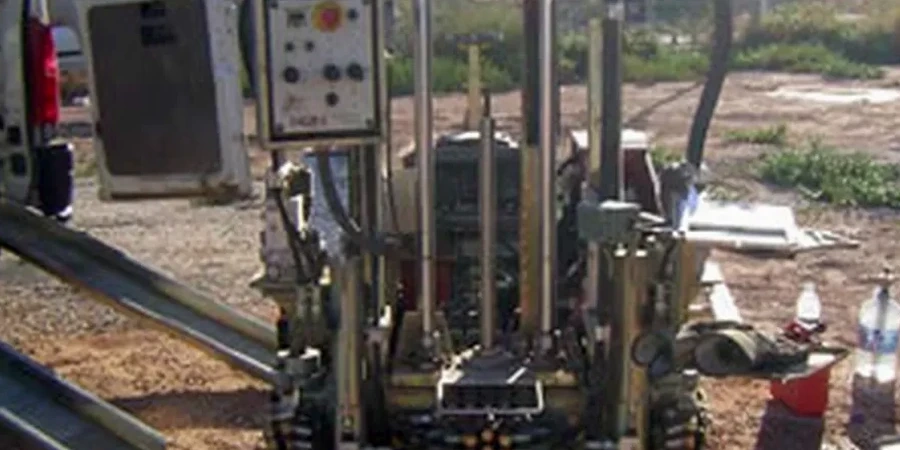
The Yamaska River floodplain under Saint-Hyacinthe packs a mix of soft Champlain Sea silty clays and loose alluvial sands that shift with the seasons. Anyone who has excavated near the river or along Route 137 knows the water table sits high—often within 1.5 meters of the surface from late spring through fall. Standard boreholes lose time in these conditions. We deploy a 20-tonne CPT truck, push a 15 cm² electronic cone at a steady 2 cm/s, and read tip resistance, sleeve friction, and pore pressure in real time. For sites where the clay crust is thin and the sand layer below triggers drainage concerns, we combine CPT with grain size analysis to confirm fines content without waiting for lab turnaround. Saint-Hyacinthe’s agri-food plants and expanding residential subdivisions both demand stratigraphic certainty, and that is exactly what cone penetration delivers.
Saint-Hyacinthe sites with high groundwater demand pore-pressure dissipation tests—skip them and you misjudge consolidation rates.
Process and scope
The city’s industrial growth—from the original dairy cooperatives to today’s biotechnology and logistics hubs—pushed development onto land once considered marginal. Fill thickness varies wildly: 1 meter in older central districts, up to 4 meters near the rail yards and newer commercial parks east of the river. CPT slices through that ambiguity. Each push records qc, fs, and u2 continuously, giving us a friction ratio log that separates natural Champlain clay from imported granular fill without a single split-spoon sample. When the cone hits a dense till layer around 18–22 meters depth, we note the refusal and often recommend a seismic refraction line to map bedrock topography across the parcel. That pairing saves piling contractors from hitting unexpected highs. For projects near the Saint-Hyacinthe–Bagot airport, where vibration limits apply, the silent CPT push is often the only penetration method the municipality will approve.
Common questions
How much does a CPT test in Saint-Hyacinthe cost?
For a standard CPTu push up to 20 meters depth in Saint-Hyacinthe, you are looking at CA$250 to CA$310 per push, depending on the number of dissipation tests requested and site access conditions. Mob-demob for the 20-tonne truck within the greater Saint-Hyacinthe area is typically included if the project exceeds a minimum of four pushes. Deeper profiles or night work near sensitive facilities may adjust the unit rate slightly.
Do I need a separate drilling crew if I order a CPT?
The reference range for this service in Saint-Hyacinthe is CA$250 - CA$310. The final price depends on the project scope and volume.
Can you push through the gravelly fill common in older parts of Saint-Hyacinthe?
Gravelly fill with cobbles above 75 mm can cause refusal or cone damage. In those cases we pre-drill through the upper 1–2 meters with a hollow-stem auger and then continue with CPT from the bottom of the pre-hole. The auger step adds minor time but protects the cone and preserves data quality in the natural soil below.
How quickly do we receive the CPT report?
Raw digital logs—qc, fs, u2, Rf, SBT classification—are available on site immediately after each push. The interpreted report with undrained shear strength, OCR estimates, and liquefaction screening (if requested) is delivered within three business days. For urgent foundation design deadlines, we can prioritize next-day delivery.