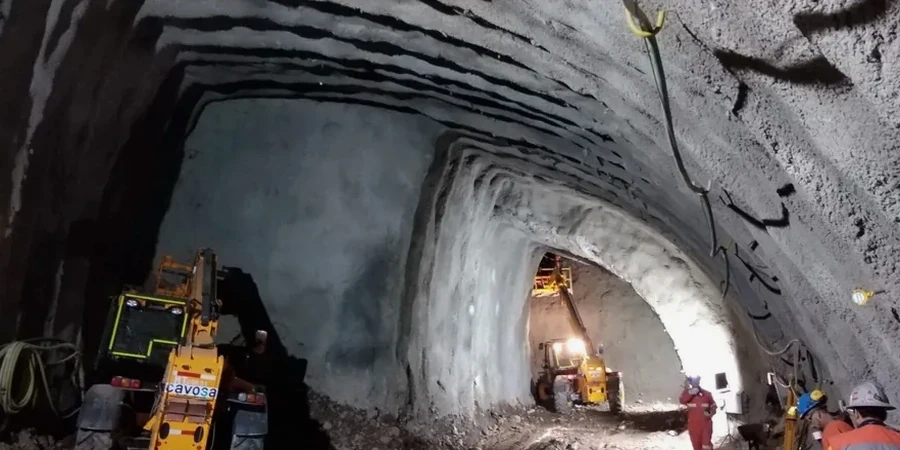
Saint-Hyacinthe sits on a geological puzzle inherited from the Champlain Sea. The clays here, especially south of the Yamaska River, demand rigorous geotechnical analysis for soft soil tunnels before any underground work begins. The National Building Code of Canada (NBCC 2015) and CSA A23.3 set clear performance criteria, but in our track record, the local stratigraphy often requires going beyond the minimum standard. Seasonal water table fluctuations in the alluvial plain directly affect effective stress fields around tunnel alignments. We've logged boreholes where undisturbed shear strength dropped by forty percent within a two-meter vertical band. That kind of variability isn't captured by desk studies. Our approach combines in-situ testing with advanced laboratory programs to define a ground model that reflects actual Saint-Hyacinthe conditions, not generic textbook profiles. For deeper infrastructure in this region, a reliable CPT test provides continuous stratigraphic profiling that complements discrete sampling programs.
Saint-Hyacinthe's Champlain Sea clay can lose half its bearing capacity with a single season of poor drainage. We quantify that.
Common questions
What investigation depth is typically required for a soft soil tunnel in Saint-Hyacinthe?
We typically investigate to a depth of at least two tunnel diameters below invert, but in the Champlain clay deposits of Saint-Hyacinthe, we often extend boreholes until we confirm refusal on the underlying glacial till. This till surface is irregular across the region, sometimes appearing at 25 meters and other times beyond 40 meters. Knowing the exact depth to competent bearing controls the feasibility of cut-and-cover versus mined alternatives.
How does Saint-Hyacinthe's Champlain Sea clay affect tunnel construction cost?
For a complete geotechnical analysis for soft soil tunnels in Saint-Hyacinthe, investigation costs range from CA$6,330 to CA$19,730 depending on the alignment length and number of boreholes required. The clay sensitivity directly influences construction cost because higher sensitivity demands tighter control on face pressure and often requires compensation grouting or ground freezing as contingency measures.
Can tunnel alignment be adjusted based on geotechnical findings during investigation?
Yes, we recommend a phased investigation approach where the first boreholes inform preliminary alignment decisions. In Saint-Hyacinthe, we've helped projects shift the vertical profile by several meters to avoid particularly sensitive clay horizons identified during the data review. This iterative process saves significant construction risk and is standard practice under the observational method outlined in the Canadian Foundation Engineering Manual.