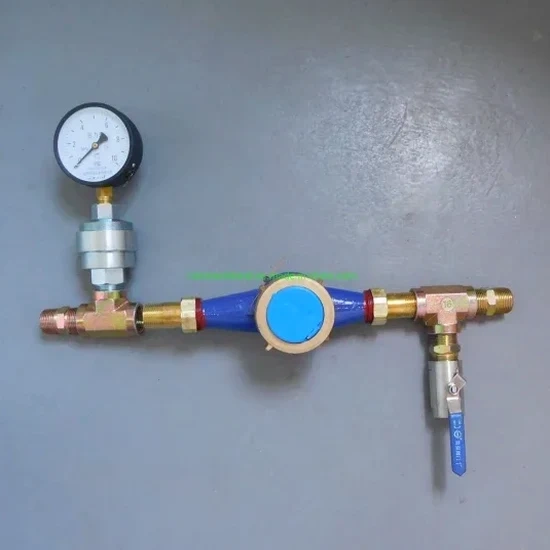
In Saint-Hyacinthe, you quickly learn that managing groundwater is not just a specification box to tick; it is the defining challenge of any excavation below the Yamaska River plain. We commonly observe contractors surprised by artesian conditions in the till, a scenario easily missed without a properly executed field permeability test. This is why our technical team runs Lefranc tests in the granular overburden and Lugeon tests when we hit the fractured bedrock, providing the hydraulic conductivity data that determines pump sizing and cutoff wall depth. For deeper investigations, integrating these results with CPT testing helps us delineate drainage boundaries in the silty lenses typical of the Montérégie region.
A Lugeon value of less than 1 in the bedrock doesn't mean it's waterproof; it means the jointing system is tight and grout takes will be minimal.
Common questions
How long does a typical Lefranc test take in the Saint-Hyacinthe clay?
Once the borehole is advanced to the test depth, the actual test phase usually takes between 60 and 90 minutes. However, in the low-permeability Champlain clays common here, the stabilization time for a falling head test can extend to several hours to ensure the readings are asymptotic and not transient.
What is the difference between a Lugeon value and hydraulic conductivity?
A Lugeon unit is defined as 1 liter of water per meter of test section per minute at 1 MPa pressure. While roughly equivalent to a hydraulic conductivity of 1x10^-7 m/s, the Lugeon test is specifically a rock mass test. It captures the combined effect of matrix porosity and fracture flow, which is the dominant transport mechanism in the bedrock beneath Saint-Hyacinthe.
What is the typical cost range for a field permeability test in Montérégie?
For a standard Lefranc or single Lugeon test setup, including drilling and technical reporting, the typical budget in Saint-Hyacinthe falls between CA$750 and CA$1,290. The final cost depends on the overburden depth, access constraints, and the number of test intervals required.
Do I need a Lugeon test if I am installing a shallow footing?
If the footing is in soil, a Lefranc test is appropriate. You only need a Lugeon test if the bedrock is within the influence zone of the structure or if you are analyzing uplift pressures. In Saint-Hyacinthe, where the rockhead can be shallow near the Saint-Thomas-de-Foucault area, we often specify a Lugeon test to check for artesian uplift risks under the footing.