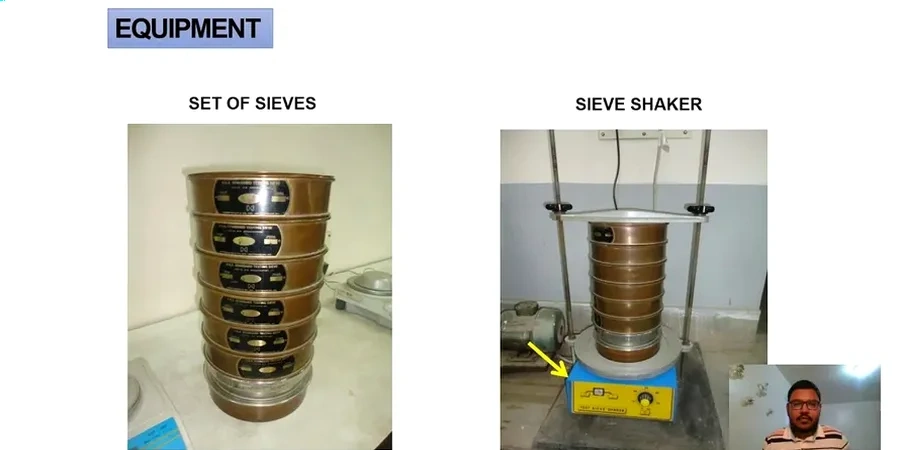
Saint-Hyacinthe sits on the Yamaska River floodplain, where deep marine clays from the Champlain Sea alternate with alluvial sand lenses. Water table is commonly within 2 meters of surface, and the finer fractions control everything from frost heave to consolidation rate. A complete grain size analysis with sieve plus hydrometer gives the full particle distribution, not just the sand cut. We run ASTM D422 from coarse gravel down to 2-micron clay, because missing the silt tail means underestimating frost susceptibility under NBCC requirements. That detail matters when you are placing footings near the river or designing subdrainage for the agri-food processing plants that define this region.
Sieve-only analysis misses 30–50% of the Saint-Hyacinthe soil mass. The hydrometer captures the clay fraction that governs settlement and frost action.
Common questions
What does a grain size test cost in Saint-Hyacinthe?
A standard ASTM D422 sieve-plus-hydrometer analysis runs between CA$140 and CA$250 per sample, depending on whether we wash the fines fraction and the number of hydrometer readings requested. Rush results add a small surcharge.
Why is the hydrometer part necessary?
The hydrometer measures particles smaller than 75 μm—silts and clays—which control settlement rate, frost heave potential, and drainage behavior. In Saint-Hyacinthe marine clays, the fraction passing the No. 200 sieve often exceeds 50%. Skipping the hydrometer means you are classifying the soil on only half the mass.
How much sample do you need?
For fine-grained soils typical of the Yamaska plain, 500 grams of oven-dry material is sufficient. If the soil is sandy or contains gravel, we ask for 2 kilograms to ensure enough mass for both sieve and hydrometer splits.
How long does the full test take?
Sieve analysis can be completed in one working day. The hydrometer sedimentation column requires 24 hours for the final reading. Standard reporting is 2–3 business days from sample receipt; we can compress that to 24 hours for critical decisions.